March Invelity news
Faster, more precise and closer to clients. The basic principles of digital marketing are unlikely to change in March either. But!

Ivana Nosalova
PPC Specialist
5. April 2019
1 min
BeginnerFaster, more precise and closer to clients. The basic principles of digital marketing are unlikely to change in March either. But!
Ivana Nosalova
PPC Specialist
5. April 2019
1 min
BeginnerFaster, more precise and closer to clients. The basic principles of digital marketing are unlikely to change in March either. But! Google promises a little less web spam once again and Facebook better stories. Content will remain king, and in the near future another interesting trick will join it. New features in Google Ads and Bing are not to be outdone, and Instagram will certainly please e-shop owners and their customers alike. The details are in our regular monthly round-up below. ;-)
The next time you sign in to Keyword Planner in Google Ads you will see a notice about several new features. Some of these are older features that were removed, such as "add to an existing campaign".
Grouped keywords now live under "Grouped ideas". You can choose whether to add all the keywords or only some of them.
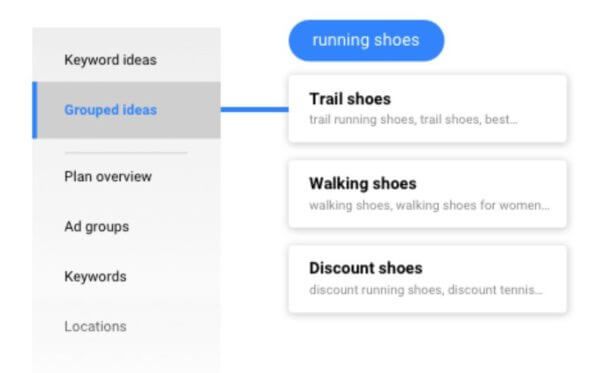
It provides more detailed information on monthly breakdowns and search volumes. You can also download this data.

Besides saving new keywords to a plan, you can also save keywords into existing campaigns.
There is also a new competition column showing how competitive ad placement is for a keyword. (You can see it in the picture above, alongside two further columns that are not shown by default: Average position and Organic impressions.)
When you add new keywords to a plan, a suggested daily budget is provided as well.

Custom audiences are now generally available in every country where Bing is used, with the exception of the EU, Norway and Switzerland.
Custom audiences allow remarketing to existing customers. Unlike other platforms (Google, Facebook), which let advertisers upload customer email lists directly, Bing Ads has opted to work with several data management platforms (DMPs). The three current partners are Adobe Audience Manager, LiveRamp and Oracle BlueKai.
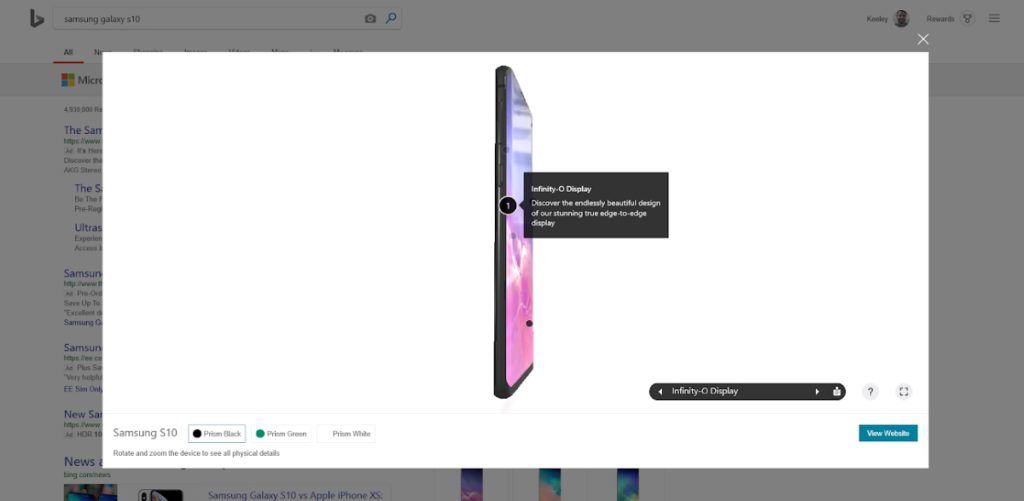
Samsung became the first to advertise a 3D ad format in search on Bing.com, promoting the new Galaxy S10 phone. The format is the result of months of coordination between Bing, Samsung and the agency Performics. So it can be said that 3D ads herald a new era of search advertising.
After the rework and the renaming of AdWords to Google Ads, the editor has now been revised too. The tool for managing and preparing campaign changes has a new look, new layout, features, options and a new name.

In Google Ads Editor we can do a great many things without having to switch to the web interface, and that should save us time. In Google Ads Editor 1.0 the top navigation bar is smaller, right-aligned and no longer in a column. If we manage many accounts — in the same or different MCC accounts — we can now apply changes across accounts. Video ads and campaigns in particular have far more features in the Editor. There is, for instance, full support for non-skippable video ads, and we can create bumper ads or add actions to TrueView in-stream ads. Also new is that Google Ads Editor now offers 5 new rules.
Facebook is currently testing a new feature that will let advertisers (companies, e-shops and so on) share and archive their stories. In our view FB wants this move to bring it closer to the significance and greater popularity of stories on Instagram. According to Facebook these new features should potentially extend a company's or brand's organic reach, visibility and credibility beyond its followers.
Facebook has announced a change for advertisers promoting products relating to housing, employment and credit. From now on these advertisers will not be able to target their ads demographically by age, gender or exact postcode in their campaigns. The reason for the move is accusations by third parties charging FB with discriminatory practices in these product areas.
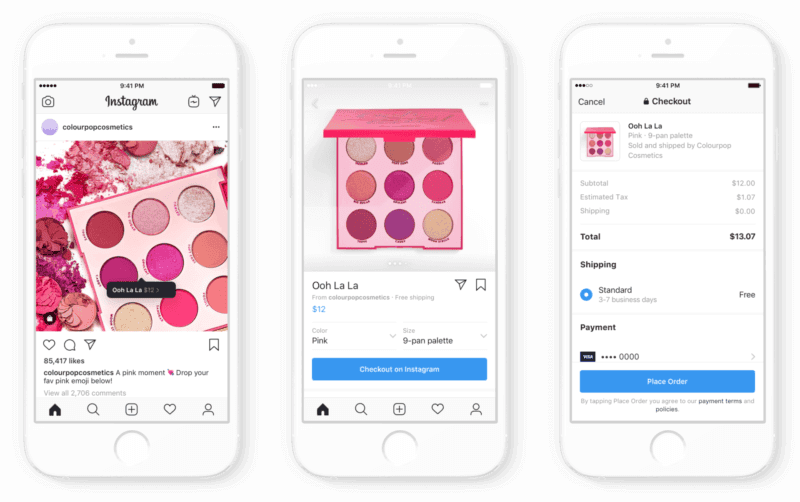
Instagram is introducing a new in-app checkout feature, which lets users buy products without leaving the app. For now it is available only in beta and to several larger brands such as Adidas, Burberry, Dior, MAC Cosmetics and the like. Behind the new feature is Instagram's ambition to become more e-commerce friendly. Introducing it lets advertisers markedly shorten the path from discovering a product to the final purchase. In practice it means that clicking the tag on a product will show a "Checkout on Instagram" button. Clicking that button brings up the order, where the payment details are saved. Once those details are saved the user will be able to buy directly on Instagram without being redirected to the e-shop, and will be able to manage their orders on Instagram as well.
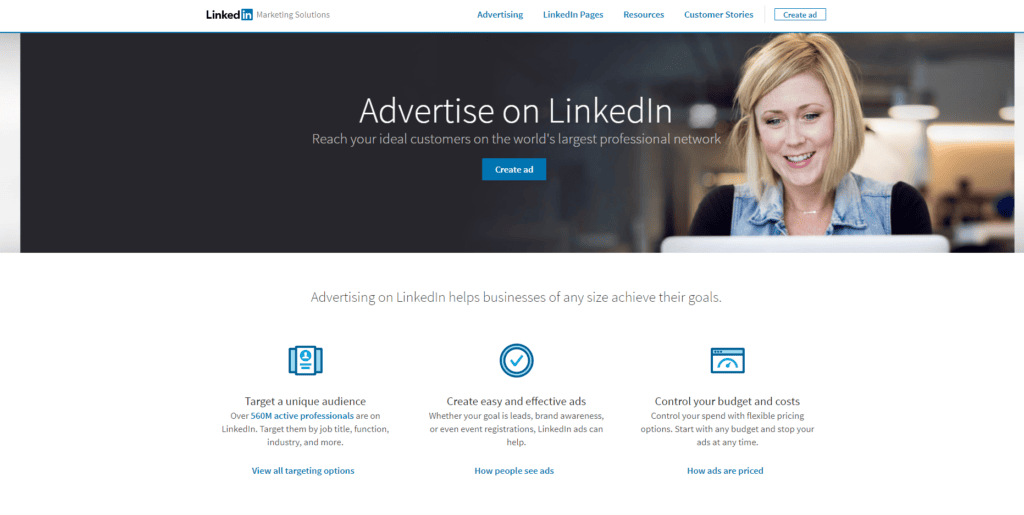
This month LinkedIn has prepared 3 new updates for its advertisers. The first is the option of targeting lookalike audiences on LinkedIn, which resemble your target audience in their characteristics (much as on FB and Google). The second is that advertisers can now target their ads by interests based on Bing data. The last arrival out of LinkedIn is that it offers its advertisers more than 20 audience templates for use in the B2B sector. In recent months we have observed a heightened effort on this platform to keep arriving with new options. LinkedIn is probably aware of its advertisers' ever-growing needs, and for that, thumbs up.
Google keeps making progress towards users' search needs. The number of searches, sites and content keeps growing, and the user expects the right result immediately (within 2 seconds). The most popular search engine places even greater emphasis on content quality, favours ease of use, and has tuned its latest update accordingly.
In short, going by site data it appears this algorithm update was not aimed at any particular strategy to fight (as Panda was). It focuses mainly on overall site quality. The short conclusion: content is still very much king, and the user has to reach it in two clicks at most.
What is rel=next/prev? It was markup that, added to web pages, marked their order and so "told" Google those pages were part of a larger set. For instance, if you have an article split across several pages, this code is how you told Google those pages were part of the same piece — the same article.
Google would then combine all the signals (backlinks, for example) and the content from every page into a single piece. Although Google has not supported this for several years, it only announced it this month. There is no need to worry, though — Google reliably works out the page order thanks to its advanced algorithm.
Google Podcasts lets you search for episodes on the basis of what was said in the show. According to Android Police, Google Podcasts automatically transcribes the dialogue and uses it as metadata. So users can search for particular episodes even when they cannot remember the podcast's name. All they need is to enter something said in the episode. The transcripts cover the whole podcast, but are not perfect. Being generated automatically, they contain errors. The name "Corbin Davenport", for instance, was transcribed as "port Corbin dabbing".
It is possible that in future, when we search for something, the information will be shown to us right there in the podcast or video in question, at the exact second it is spoken about. So if you make videos and put them on YouTube, take care that what you say can be heard clearly. It may pay off later, once Google launches content search within video.
The result of the targeted updates is that fewer than 1% of users reached spam pages through search results. That is thanks to Google's ever-improving algorithms, which are getting better and better at detecting it.
Ivana Nosalova
PPC Specialist
The latest trends, proven practices and analyses from the digital world. Find out how to take your technology and marketing growth further.
And don't forget to check out Invelity Extras – you'll find a marketing glossary, useful tools and plugins to make your work easier!
Invelity Extras