You need not be a fan of the show. But if the secret of its phenomenal success interests you, and you fancy transplanting a piece of it into your own business, read on.
You need not be a fan of the show. But if the secret of its phenomenal success interests you, and you fancy transplanting a piece of it into your own business, read on. Because there simply must be something behind that success...
Anyone who sells something, or helps to sell it, would like to live through their own "game of thrones" one day. Their own unexpected, organic success. And although the budget of a single episode of Game of Thrones (roughly €14 million) utterly dwarfs the cost of, say, the Slovak mega-hit Trhlina (€609,000), the cause of its success lies somewhere else entirely. In my (popularly written) analysis I will focus on precisely those hidden — let us call them psychological — factors that, in the end, achieve fantastic results. And sell.
Exactly. Every marketing handbook begins with this question, or with customer typology. With building one or more specific personas standing in for real customers with their particular traits, habits and bad habits. The show has all of them. How do I know? Among my favourite subjects is Jung's psychology of personality, which speaks of extraversion and introversion as the cornerstones of personality. His theory was later "fine-tuned" by Isabel Briggs Myersin the well-known MBTI personality indicator. This 16-type theory of personality describes the variety of the human psyche perfectly, and, as you have surely guessed, every type has its model character in the show.
The carefully worked-out typology of all the characters is one reason for the show's success.
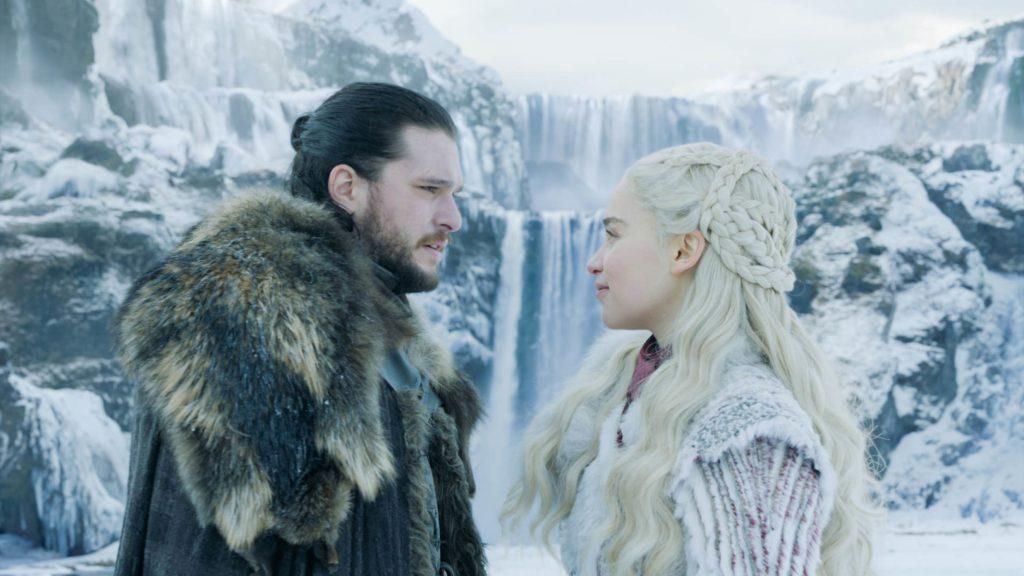
One of the key heroes, for example, Jon Snow, is an INFJ type(INFJ being an acronym of the dominant components of the personality: Introverted, iNtuitive, Feeling, Judging) with an innate sense of idealism and morality, well-developed soft skills and sensitivity towards others, but on the other hand also a capable, motivating and persuasive leader. A customer with this personality type is therefore better reached by a campaign appealing to higher, supra-personal, social principles — to values, in other words, rather than to a full stomach or a sexy haircut. And take note, this is likely to be an unusually sensitive personality with perfectionist leanings.
Jon Snow (left) – the INFJ personality type – leaders of social change, who can seem "too soft" to others. (Photo: HBO)
The precise, rich psychological division of the characters helps the viewer identify better and attach more strongly. It means the viewer can identify with a character perfectly, incline towards them subconsciously or emotionally, live through their story, because within it they will subconsciously recognise their own. And frankly, we are very fond of looking at ourselves.
It should work much the same way in your business: the better drawn, the more clearly defined the personas you can pin down while building your strategy, the better. All of which is closely bound up with another factor that our beautiful and perfect SELF officially need not want, but somewhere inside seeks out passionately...
Our daily shadow
The shadow is what your customers do when nobody is watching. Mostly those "bad, bad, ugly things". Add to that the fact that people genuinely think themselves better than they actually are. There is plenty of reliable research on the subject; speaking for all of it is my favourite, the Dunning–Kruger effect.
The Dunning–Kruger effect is a type of cognitive bias whereby less qualified people, or people with low ability and competence in a given field, markedly overestimate their abilities and performance relative to others. (Photo: Dean Yeong)
In Game of Thrones they grasped this very quickly and let the dark human sides float nicely up to the surface, into the candlelight. So they showed us, without difficulty, the shadows hiding behind our polished promotional ego. And it works. Translated into our marketing language, do not be afraid to show your customers their shadow as well.
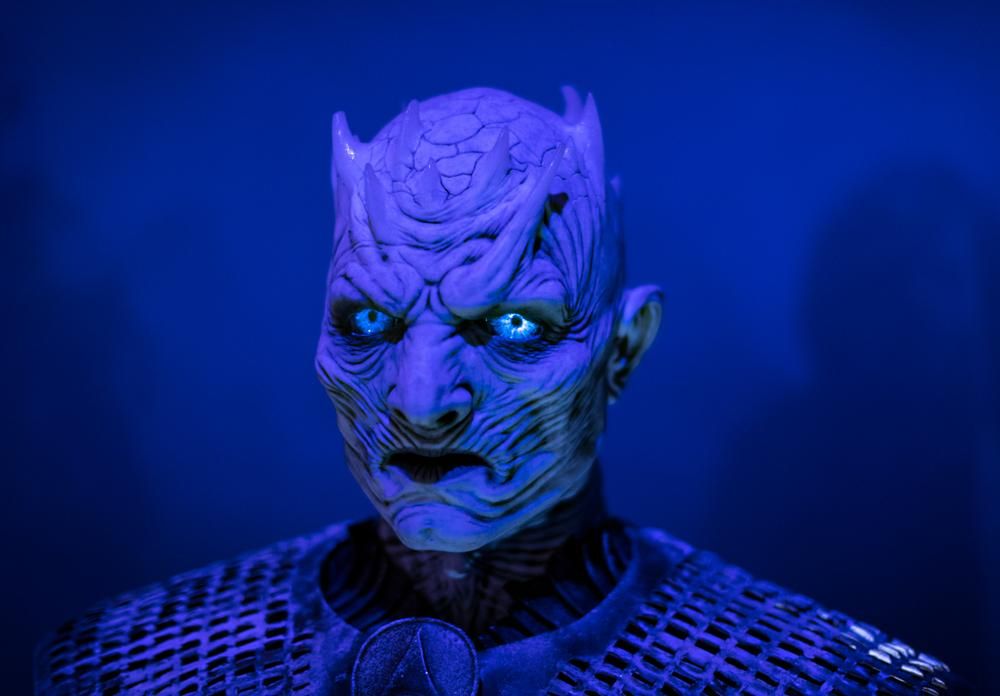
Attractive and terrifying at once. Such is our personal shadow, "made flesh" in the show above all in the Night King.
If you sell chocolate, let a slightly overweight hero eat it in front of an open fridge at half past one in the morning, blissful expression on his face. Or a hockey player in the national shirt cooking goulash. Customers' perfect "promotional SELF" may feel pangs of guilt, but their shadow will be in seventh heaven.
Even perfect athletes have their shadowy, "goulash" side. (Photo: Kaufland campaign)
Put another way, when preparing a marketing strategy, give some thought to your customers' negative traits as well. The perfect "promotional self", or more technically the "ideal self", is dull and often a generic myth besides. People are in fact less perfect than they think. Let us look at what else can shape a customer's personality.
Those (un)certainties.
The classics of behavioural and Gestalt psychology alike held that everything comes down to the setting of the environment and the context we move through. The less predictable that context, the more it generates heightened dependence, stress or neurotic reactions.
Game of Thrones is, in this respect, a neurotic gem. With disruptive twists and an unpredictable plot it keeps viewers in a state of uncertainty and forces them to keep reacting. Which is beautifully titillating and, at the same time — forgive the expression — thoroughly infuriating. The viewer becomes a small-time serial gambler.
None of the show's characters is guaranteed to "survive" to the final episode. Not even Tyrion, incidentally an ENTP, the debater. This personality type embodies frankness, empathy and strong argumentative skills, often in favour of something he does not believe himself. (Photo: Helen Sloan, HBO)
So the message for your business is clear. Keep the customer in a reasonable state of uncertainty. Not, of course, about the quality of your services or products, but rather in the creative sense. Invent, change strategies, entertain them with new ideas and "force" them to react. Your "promotional self" may love formulaic shows with a clear ending and a perfect happy ever after, but somewhere inside it is still waiting for the "night king". One way of achieving that is to be authentic.
The return of authenticity
Someone who is authentic is neither dull nor embarrassing, and perhaps not even bad. That is roughly how we take it now. Otherwise we could not rationally explain the success of those millions of videos on TikTok, say. In Game of Thrones too, everyone is themselves. Yes, even when they lie, cheat and kill. Precisely then. Being yourself has become a new moral quality. And we cannot be surprised. Frankness, even at the cost of a certain impropriety, is part of that liberation of the shadow. While psychologists such as Abraham Maslow idealistically linked the authentic SELF with positive human qualities such as the capacity for empathy, the show understood it rather as the liberation of the instinctual, shadowy side of our personality. Marketing campaigns can thus open Pandora's boxes and raise subjects that were taboo until recently. Authenticity is also the principle influencer marketing is built on. For your business it is an excellent opportunity to "test" your customers and offer them more open, more direct, franker content without stock photos and sophisticated scripts. Authenticity is, and will be ever more, IN.
The branding legend Wally Olins speaks of authenticity as a current trend too. (Source: Trend)
It cannot be done without an audience
Understandably, neither the success of Game of Thrones nor the show itself sprang up overnight from nothing. Like other successful shows and films it has a book behind it and, above all, a long-standing, strong fan base. An excellent example whose background is not widely known is the novel Fifty Shades of Grey, which the author originally wrote as a freely available serialised e-book. She was thus building a loyal fan base organically as she went. The film's worldwide success was then merely the natural, logical outcome.
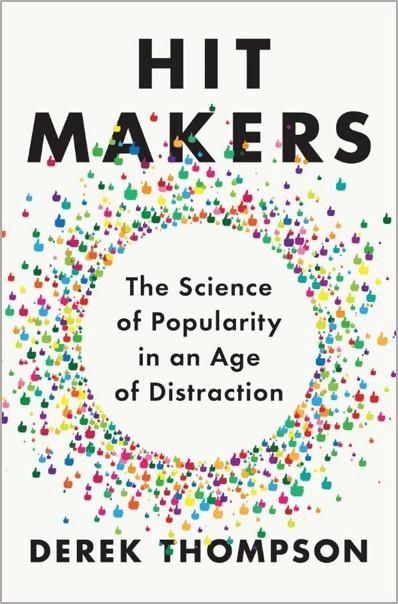
Derek Thompson analysed the viral success and the secret of the popularity of "Fifty Shades" in his recent book HIT MAKERS.
In closing, one last recommendation: be patient, build on proven personality psychology, authentic communication and long-term cultivation of your community.And success is bound to come. Well, it ought to... ;-)
Recommended reading
The latest trends, proven practices and analyses from the digital world. Find out how to take your technology and marketing growth further.