
Jakub Gombár
Co-Founder
We bring you a regular round-up of news from the world of online marketing. This time we have gathered everything from 2019 into a single post. So if you missed something during the year, here is the most important of what may have passed you by.
For anyone who has not yet heard of this new format, it is an ad type meant to make A/B testing ad copy easier for advertisers. Google lets advertisers set up one ad with several headlines and several descriptions.
Advertisers can enter up to 15 headlines of up to 30 characters, against the previous 25, and 4 descriptions of up to 90 characters instead of 80. Google then automatically tests and looks for the best combination matching users' search queries and most likely to reach the goal you have set.

This year YouTube arrived with a new format: a 15-second non-skippable video. It is an upgrade on the 6-second non-skippable ad, which in our experience can achieve half the cost per thousand impressions of a classic skippable in-stream ad. The advantage of the new format is that we have more room to catch the user's interest.

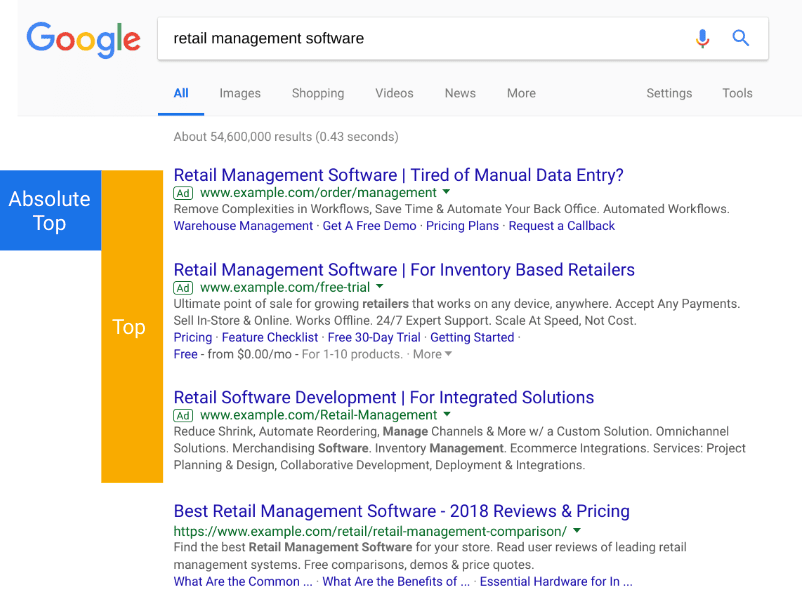
At the start of September Google removed every marketer's beloved metric, average position, from the ad system. Following the change it recommends using metrics such as impression rate at the top (Top position) or impression rate at the absolute top (Absolute Top).
Although many PPC hands worked with the average position metric routinely and it was often part of monthly reporting, it was not an entirely precise measure. Since it was derived from the ordering of paid ads, there was no way of knowing whether position 1 meant the top or the bottom block. The new metrics replacing it should be far more precise.
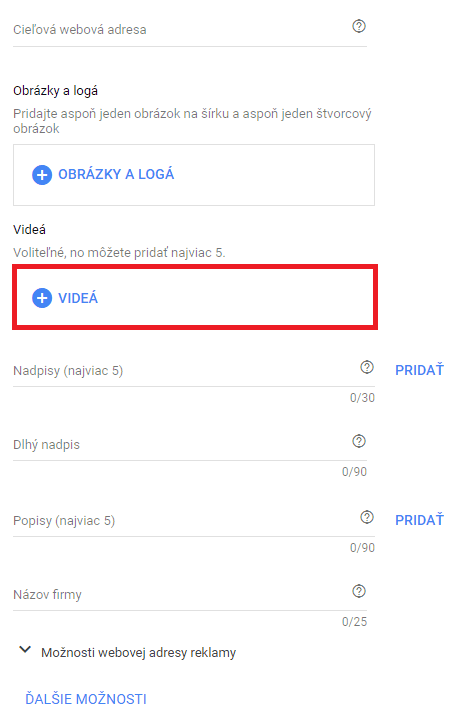
From this month you should have the option everywhere of adding video as well as images to responsive ads on the display network. An advertiser can add a maximum of 5 videos to an ad, and the system will rotate them and show them to users combined with the copy most likely to reach the goal you have set, whether a purchase, a registration or the like.
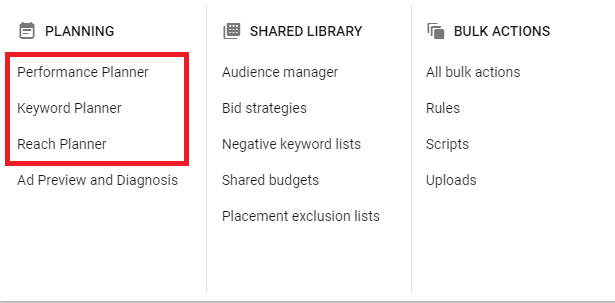
Another arrival in Google Ads is the addition of two new planners to help marketers plan campaign reach better — the reach planner — and campaign performance — the performance planner.
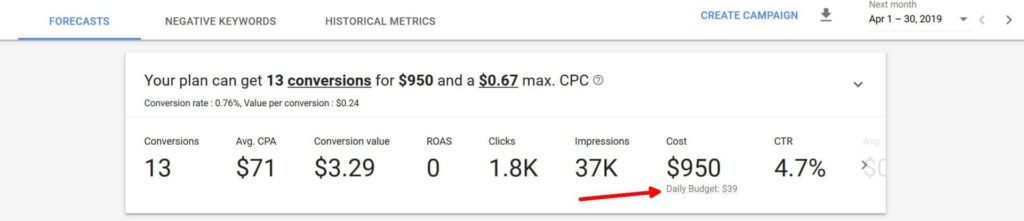
Performance planner — through it you can very easily identify how much you need to spend to increase conversions, or goals (purchases, form submissions…)
Reach planner — a Google Ads campaign planning tool designed for planning video campaigns precisely, based on reach across YouTube and video partner sites and apps in more than 50 countries.
Grouped keywords now live under "Grouped ideas". You can choose whether to add all the keywords or only some of them.

It provides more detailed information on monthly breakdowns and search volumes. You can also download this data. Besides saving new keywords to a plan, you can save keywords into existing campaigns.

There is also a new competition column showing how competitive ad placement is for a keyword. (You can see it in the picture above, alongside two further columns that are not shown by default: average position and organic impressions.)
When you add new keywords to a plan, a suggested daily budget is provided as well.
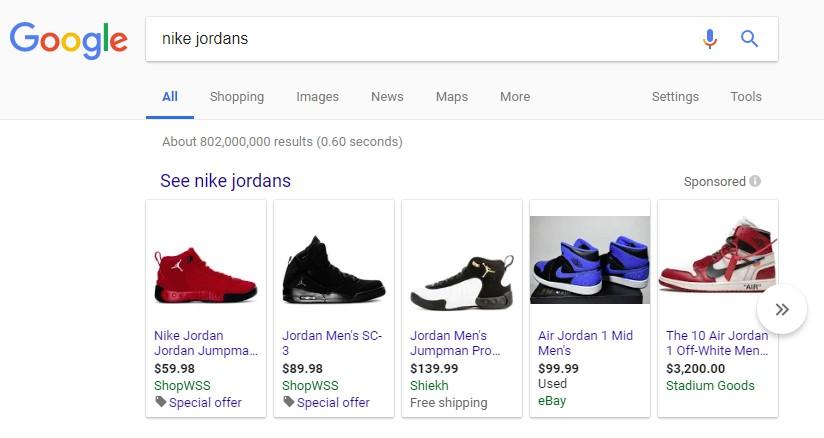
This will please every e-shop owner advertising on Google, and marketers too. Google shows the products themselves right in the search results, with an image, price, availability and shipping cost.
The splendid part is that clicking a product takes you straight to the chosen product in the e-shop. So the customer immediately gets what they are looking for. The benefits this brings sellers themselves hardly need spelling out.
Google has arrived with a new automatic strategy meant to help maximise a campaign's total conversion value. At present you can use this campaign on the search network, and it suits cases where budgets are constrained at campaign level, so the target return on ad spend (tROAS) strategy cannot be used.

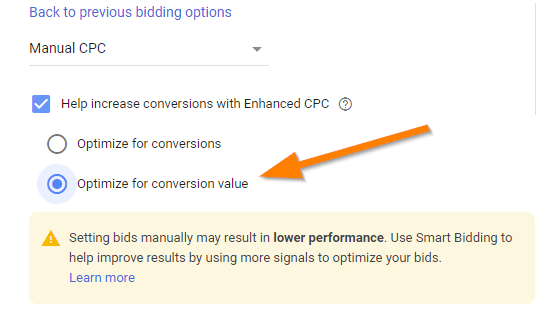
This year Google also introduced a new option for the manual eCPC strategy, extending smart bidding so the strategy can be optimised either towards conversions or towards conversion value.
Google Ads has gained an extension to help clients collect leads and make advertising and gathering contacts easier. The extension is available on mobile devices only. A fast, mobile-optimised environment should make submitting a form easier without the customer having to go through to a form on the site.
The extension can also be used with e-commerce clients who want further information from the company before making a purchase.

Another practical change is the option of setting optimisation towards selected conversions at the level of a chosen campaign. This new functionality allows the Google Ads algorithm to be trained solely on optimising the key actions you want to focus on in each campaign.
If, for instance, you know that one product in a campaign has a long buying process, you may want to focus on conversions other than purchases, such as opening the contact page. Conversely, with a shorter buying process you will want to optimise campaigns purely towards sales.

Through this tool you can reach still more prospective customers. If you find that one of your own audiences performs particularly well, the tool will find further consumers who look and behave like the people in that audience.

If you have ever used Smart campaigns, you will know there is very little in them an advertiser can influence. Beyond the creative and the target cost, these campaigns are fully automatic.
From now on, though, seasonality bid adjustments will be available for events where a marked rise in conversion rate is expected — sales, a product launch and so on. More about this practical addition here: LINK.
Since October this year, affinity audiences — based on long-term interests — can be added to RLSA audiences as well.

Google has updated exact match, which now lets you reach more relevant queries without having to expand the keyword list. So ads will appear for keywords with a "close" variant of the keyword too.
Phrase match and broad match modifier will get the update as well. They will match ads to terms corresponding to search queries with the same meaning as the keyword.
Campaign optimisation scores and recommendations help us with the largest errors and with suggestions that could improve campaign performance. In the past this was used mainly with search campaigns, but it was later added to shopping campaigns as well.

Different audience attributes can be combined — demographics and interests, for instance — letting us build "personas" representing audience segments. By building personas from users' background, needs and goals it is possible to target the right customers at the right time. That lets us create an intersection of audience segments and so target the majority of advertisers.
Did you know you can connect your business page to groups? You can choose whether to post in a group as a person or on behalf of your company. Several people have said that this connection, and communicating on behalf of the company, won them greater interaction from other users in the group, who then began following the company and interacting with it more — which is very good for the future and for closing a possible deal.
The question, though, is whether companies will start abusing the group purely to harvest opportunities, so that the point of the group disappears entirely. You can read more HERE.
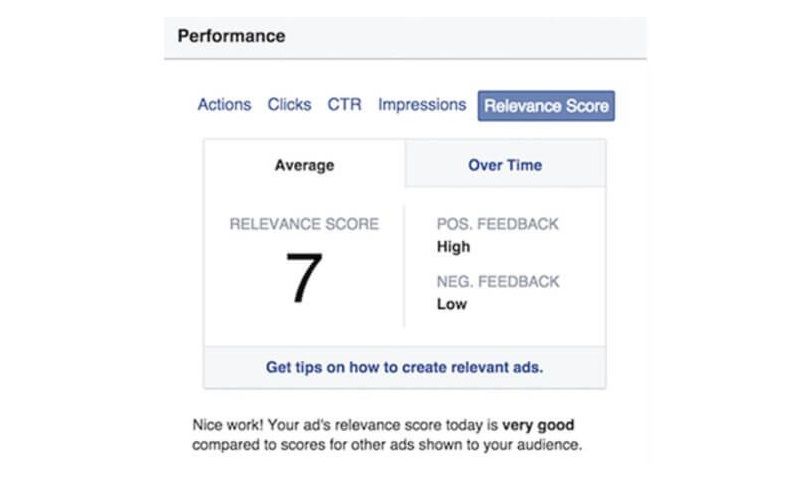
In the first half of the month Facebook announced the end of the metric showing an ad's relevance to the target audience in question. There is no need to despair, though — the metric will not disappear entirely, it will merely be replaced by three new indicators:
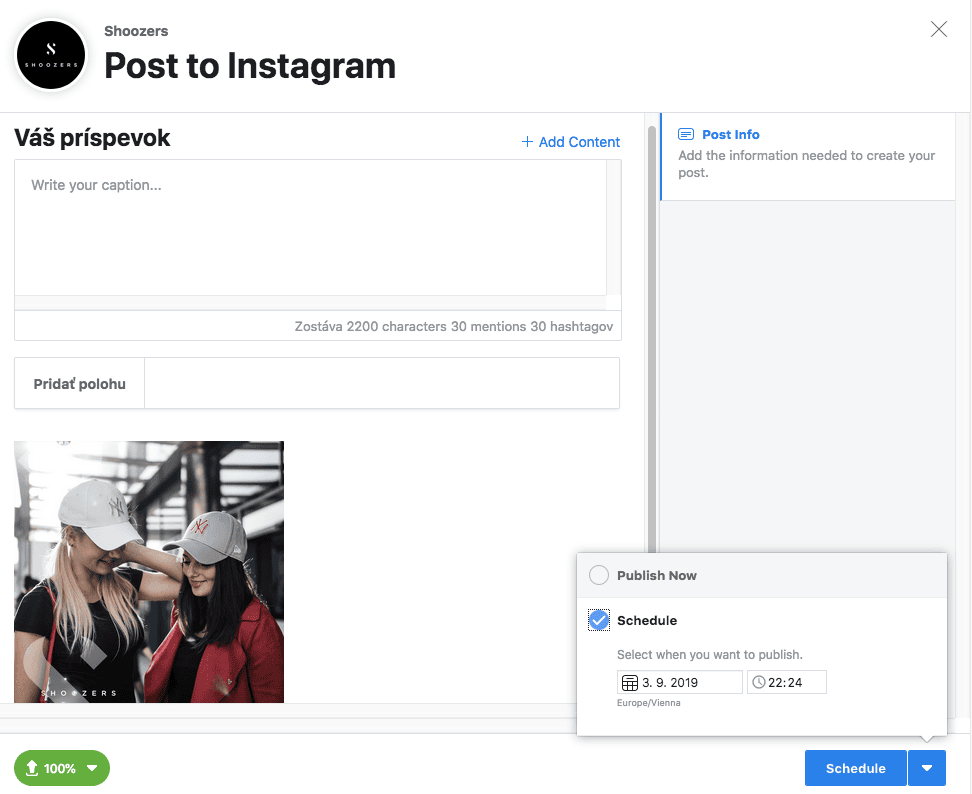
Facebook Creator Studio, the tool for managing social media content, finally lets you manage the content of Instagram accounts as well as Facebook. And schedule it in advance! You can choose an ordinary feed post or IGTV, and the whole post can be shared on Facebook too. The app also adds standard statistics and reports to help you keep an overview of every post.
This change pleased private users rather than business profiles, and drew still more fans to the ever more popular Instagram. The option of choosing a track from a rich library, or having friends choose it, and combining it with your own photo, video or lyrics is enticing, and in the first days after the launch in Slovakia Instagram stories were flooded with hundreds of musical excerpts.

At the end of September Instagram made it possible to tag branded content on the ever more popular video platform IGTV as well. As with product tagging in the news feed or stories, the feature is available only to verified and approved profiles meeting specific conditions, and the brand has to confirm the user as a business partner.
The content is then shown labelled "Paid partnership with" and the business partner receives a notification of the tag. As in a story, the tag can be changed or removed in a published video.

Has it ever happened that you needed a custom metric on FB (PNO, say :-)) when reporting your campaign data, one the business interface does not provide? As in Google Ads, Facebook offers the option of building custom metrics from formulas. You can create your own custom report in Business Manager under the Ads reporting tab.
Here, in the Measure and Report section, we find custom metric creation:

Following Google's lead on responsive ads, Facebook has arrived with an entirely identical ad format. Thanks to it, ads can carry several descriptions, headlines and pieces of ad copy. The ad system then dynamically shows the combination it decides will bring the best results, depending on the campaign objective set (leads, purchases and so on).

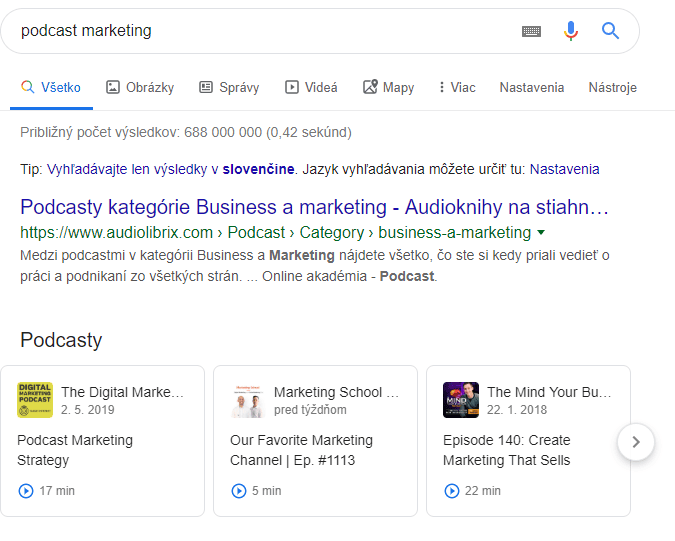
This is good news above all for producers of audio content. Google has "honed" the technology for capturing sound as well as possible, telling content apart and indexing spoken words. It is evidence of Google's growing support for voice search.
Google has made another update, named BERT. Its aim is to understand a search term better in terms of context. It is a large step towards getting closer to the user. In testing, Google found that BERT helped its algorithms grasp the nuances of questions and understand connections between words that it previously could not.
For now it is being tested mainly in the USA. If your site is aimed at that part of the world, we recommend writing as naturally as possible.
This matters above all to owners of older sites that used Flash (SWF files) to liven up their graphics. At the end of this year Google will begin ignoring content in this format, so we recommend using HTML5 and, in some cases, JavaScript.

Jakub Gombár
Co-Founder
The latest trends, proven practices and analyses from the digital world. Find out how to take your technology and marketing growth further.
And don't forget to check out Invelity Extras – you'll find a marketing glossary, useful tools and plugins to make your work easier!
Invelity Extras


