
Claudia Blišťanová
Idea & Social Media Consultant
The online environment is a field that has to be watched constantly. Every day brings new arrivals, updates or planned tests of improvements. Put simply, if you work in online, you can never nod off. That is why we bring you news from the marketing world every month. We try to help keep you in the picture.
In the latest round-up you will learn that Google is changing location extensions in as many as 24 countries, Facebook is replacing pages' LIKE button with FOLLOW, a change to a site's layout can affect its ranking, and much more. Enjoy the read.
Google is introducing free shopping listings in more countries. Retailers will soon be able to run free listings on the Shopping tab across Europe, Asia and Latin America. In the USA this happened at the start of this year, and these new changes are planned for mid-October. The decision to introduce free listings came as a result of the financial crisis brought on by the pandemic.
Google quietly rolled out a search terms update and is announcing in accounts that from September search queries without a "significant" volume of data will no longer appear in query reports.

The announcement offers no further explanation of what will count as "significant".
Until now a location extension required linking Google Ads with a Google My Business listing. From now on, in 24 countries, it will be possible without that — using only a list of locations of selected retail chains, supplied directly by Google Ads.
It will be possible only in these countries: the USA, the UK, Canada, France, Germany, Australia, Brazil, the Netherlands, Japan, Italy, Denmark, Switzerland, Spain, Sweden, Norway, Mexico, Belgium, Austria, India, New Zealand, Turkey, Singapore, Taiwan and Hong Kong.

From now on we will be able to work with campaign plans for Shopping campaigns within the Reach Planner. They will be available in every country where Shopping campaigns are available.
This is a significant change for every advertiser on Facebook. In practice it means the network will no longer penalise ads containing more than 20% text in the image. The change is not especially positive, though. Instead Facebook is testing several other restrictions whose interpretation is far less clear than the 20% rule.
To check the volume of text in your ad you can still use the Grid Tool. The tool remains useful, but exceeding the one-fifth limit is no longer a constraint.
Facebook has decided to test a new approach. It has defined 4 categories — OK, Low, Medium, High — expressing how far text covers the image. The higher the coverage, the less reach potential the ad gains. Best of all, of course, is the OK category, where your ads run without trouble.

There are several exceptions, though: film and concert posters, book covers, infographics and others. But bear in mind that the platform counts a logo, a watermark or numbers as text too.
LinkedIn arrives with a fresh update bringing a new look and, besides that, the introduction of stories. LinkedIn's new look will be cleaner, the dominant blue will go and grey will take over.
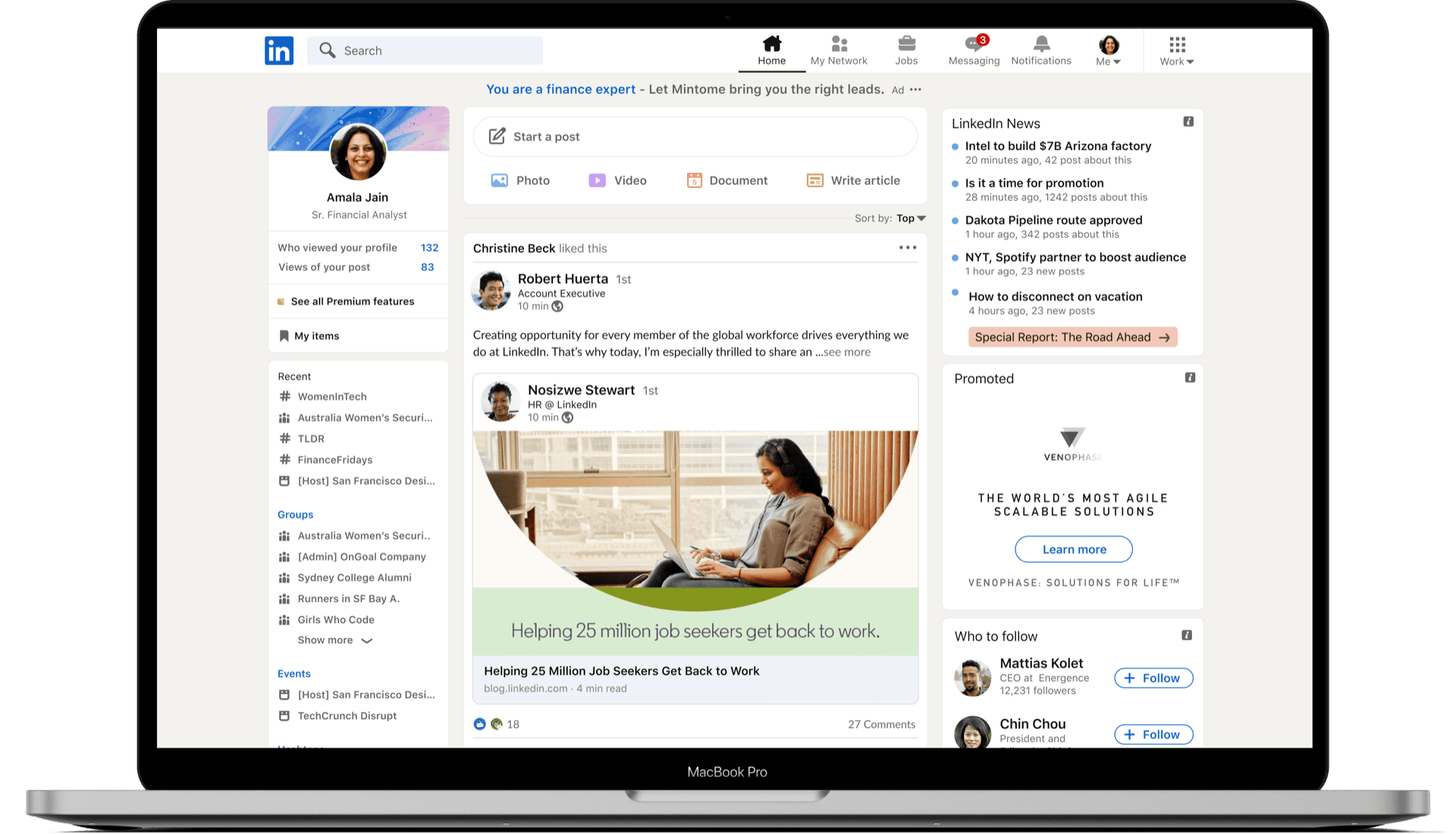
The update is meant to be a new chapter in the company's development. It is meant to give its users ample room to gather and help one another. The new look is meant to embody the diversity and openness of the LinkedIn community.
Besides the design changes, LinkedIn has added new features to match the format. The most striking is the addition of stories. But it has also improved the search process, made video conferencing available in messages and allowed already-sent messages to be edited.

According to LinkedIn, users are responding very positively to the arrival of stories. We will be able to look forward to them soon as well, since the platform plans to extend them to further areas.
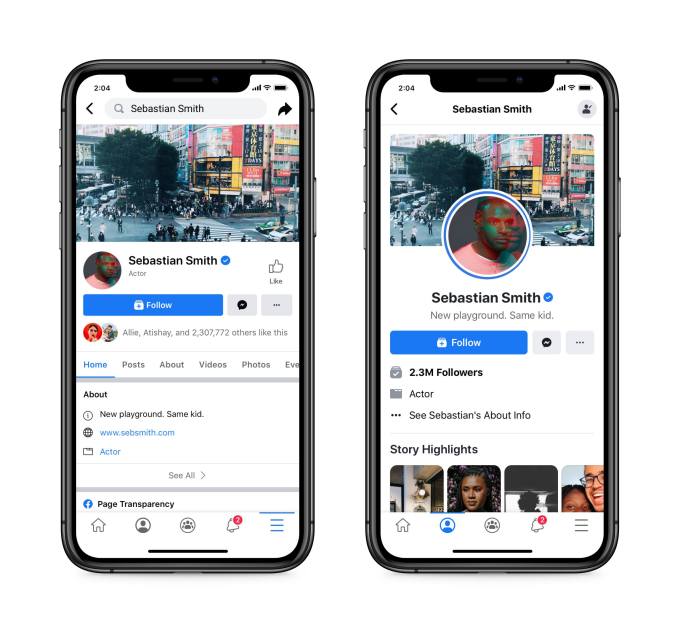
Facebook is bringing a new page design to its app. It will focus more on a page's basic information and bring it to the fore. The like button will be a thing of the past, replaced by the follow button, which matters more to a page. A page's fan count will no longer be shown either; only the total number of followers will be visible.
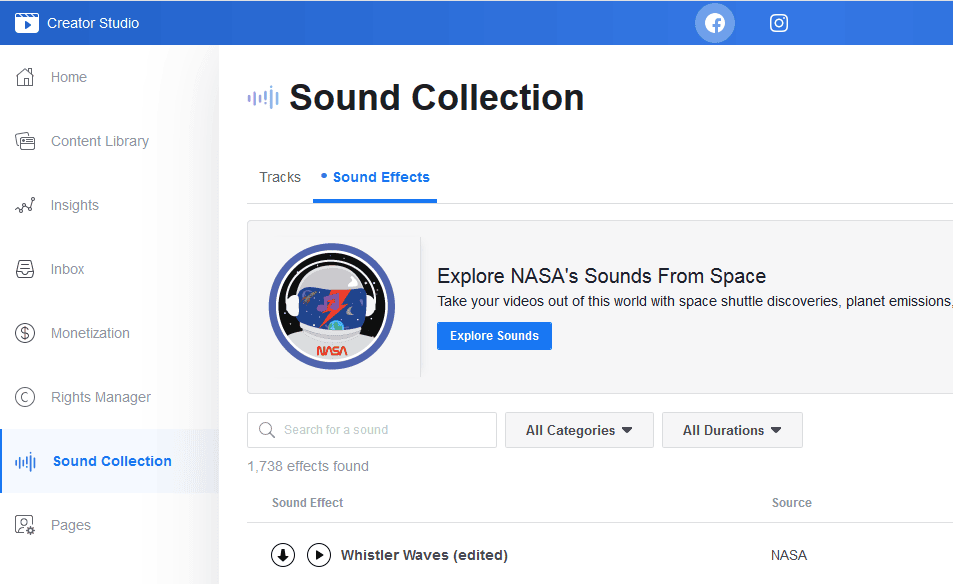
Facebook had trouble obtaining licences for musical works, so it decided to build its own music library. It is meant for all musicians, who can store their music videos there. This way Facebook obtains the rights to use the tracks uploaded. And once Facebook has them, so do all its users. You will be able to use these tracks in your ads or videos without trouble. At the same time, though, your video using the music of a musician who used the Facebook library will appear in that musician's feed.
According to a recent study examining search results for 30,000 keywords, Google rewrites pages' meta descriptions more than 70% of the time for pages on the first page of results.
Analysis of the search results found that on mobile Google rewrites meta descriptions 71% of the time and on desktop 68%. From the figures we can infer that Google uses a page's own meta description roughly 30% of the time.
Rewrite rate by search position
The study's data focuses primarily on the first page of organic results, featured snippets aside. Since the highest click-through rates are at positions 1–3, it matters that the meta description rewrite rate rose at positions 4–6. That may be because Google is trying to raise the relevance of those results to win more clicks before users leave the page or search for something else. Meta descriptions will therefore be rewritten more often depending on where a page sits in the results.
Rewrite rate by search volume
Trends were observed when examining the relationship between rewrite rate and search volume. Notably, the higher the search volume, the less likely Google is to rewrite the meta description. That may be because SEOs prioritise writing meta descriptions for keywords with the highest monthly search volumes.
Meta description length
Desktop
Another factor that can vary with meta descriptions is the number of characters Google decides to show. On desktop, the characters displayed were found to peak at 156 and fall away sharply after 165. If a date appears in the snippet, that figure could drop to roughly 142 characters. When Google rewrites a meta description, it is likely to show between 160 and 167 characters. With dates the range is between 147 and 149 characters.
Clearly Google gives itself more room to work with when writing meta descriptions than it gives site owners.
Mobile devices
On mobile, visible characters for snippets without a publication date peak at 118 and drop away after 121. The description length on mobile for snippets with a publication date falls somewhere between 95 and 105 characters. When Google rewrites a meta description on mobile, around 114 to 121 characters appear. With dates the range is between 99 and 105 characters.
Google has warned that updating a site's layout can affect ranking, even where the URLs and the content do not change.
At a Google Office Hours session, John Mueller was asked whether changing the layout of a web design alone could affect ranking. Mueller answered at once and without any ambiguity. He said yes, it could affect ranking.
Changing your pages' layout can affect your search results. That is something some people also work on actively when it comes to on-page SEO. So things such as working out how to use headings on a page properly, how to build internal links properly, how to give the article itself more context. All of that can certainly affect SEO.
A web design layout comes with considerations that can affect on-page ranking factors. So a change to a web design layout has to be weighed before making any changes to how the site looks. Updating a web design layout can be demanding, but it can also be a way of starting afresh. It is useful to become familiar with the stylesheets and the underlying code so you can formulate a plan of what you want to remove, what you will keep and what needs changing.

Claudia Blišťanová
Idea & Social Media Consultant
The latest trends, proven practices and analyses from the digital world. Find out how to take your technology and marketing growth further.
And don't forget to check out Invelity Extras – you'll find a marketing glossary, useful tools and plugins to make your work easier!
Invelity Extras


