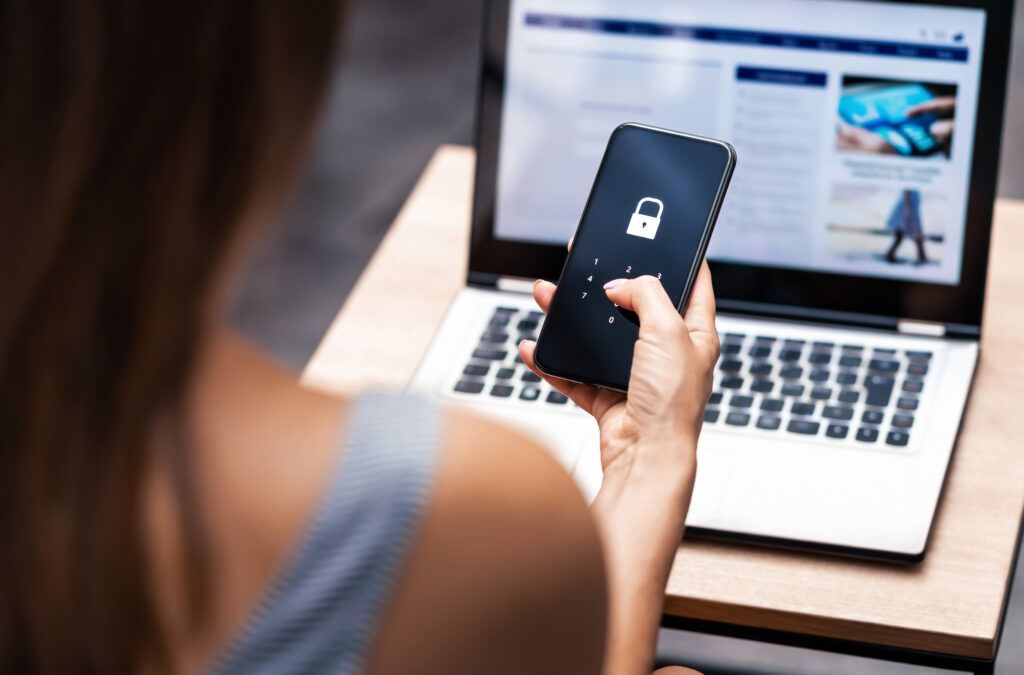
The internet is a very important part of many people's everyday lives. Thanks to it we have access to a huge amount of information, it is a form of relaxation and entertainment, it lets us…
The internet is a very important part of many people's everyday lives. Thanks to it we have access to a huge amount of information, it is a form of relaxation and entertainment, it lets us communicate with people all over the world, and many cannot do without it at work either.
But the internet is also a place where hacker activity is nothing unusual, which is why we should all pay close attention to safety online. There are many simple and more complicated principles you can follow where internet safety is concerned; in today's article we will look at the basic ones.
Today children use the internet a great deal too. If you are interested in how to support children's safety online, read our article HERE.
Passwords
Strong passwords are the basic thing where safety online is concerned, yet many of us ignore this principle. You need to create strong passwords containing a number, an upper and a lower case letter and a special character, and ideally the password should be longer — best of all at least 8 characters. This is done so that your passwords are hard to guess. A good tip for creating such a password is to have it generated automatically. It also matters not to have the same password everywhere.
Two-factor authentication
Another important and simple thing that can raise your safety online is two-factor authentication. Such authentication can involve verification by SMS code or by an app, for instance. Even though it is an extra step when signing in to your accounts, we certainly recommend not skipping it.
Public Wi-Fi
It matters to remember that public Wi-Fi networks are more vulnerable to hacker attacks because they are often not very well protected. So do not sign in to internet banking or other important accounts over a public network. In connection with this point a VPN (Virtual Private Network) is worth mentioning too; using one gives greater security and protection of data transferred over the internet. Internet traffic is protected by encryption and the user's IP address is hidden.
Suspicious sites and emails
Caution online also involves being careful when visiting sites. You need to watch out for dubious sites and emails. If sites are not secured, it is better not to create accounts on them or buy from them. Do not click unknown links either, whether on the web or in emails received from a sender you do not know. Hackers can use these links to spread malware or other harmful content. This applies to downloading files, leaflets or PDF materials too. Watch where you download from and always download only from trusted sites you know.
Updates
Software updates, and updates to the apps themselves, give users the latest security measures. Updates may also contain fixes for security flaws.
Antivirus
The last but by no means least important point is antivirus. Such software helps protect against various kinds of security threat. Antivirus programs scan the computer and detect malware that could be used by hackers to damage the computer or gain access to sensitive information.
So generally you need to pay attention to safety online and be aware of the possible risks so that you do not have to fear your data leaking or, for instance, money being stolen from your accounts. Since prevention is essential, try to bring some of these steps into your life, because putting right the damage done afterwards is harder than avoiding it.
Recommended reading
The latest trends, proven practices and analyses from the digital world. Find out how to take your technology and marketing growth further.