Location now in every banner
Google arrives with a practical change within Google Ads. From now on, if you want to show the location or address of your bricks-and-mortar branch in display ads, you will no longer have to create an ad with a location extension. Google has decided to simplify and automate the whole process. It is enough to have the location entered in the account as an extension. That location will then be shown automatically in every banner on the display network. The logical condition is that the user is near the branch in question and falls within the campaign's targeting.

A new design for search on mobile
Google Ads also arrives with a new design treatment for search ads on mobile. It places the URL above the ad copy, along with the Ad label. With organic results, the favicon and the site name will now be shown next to the URL.

Policy manager
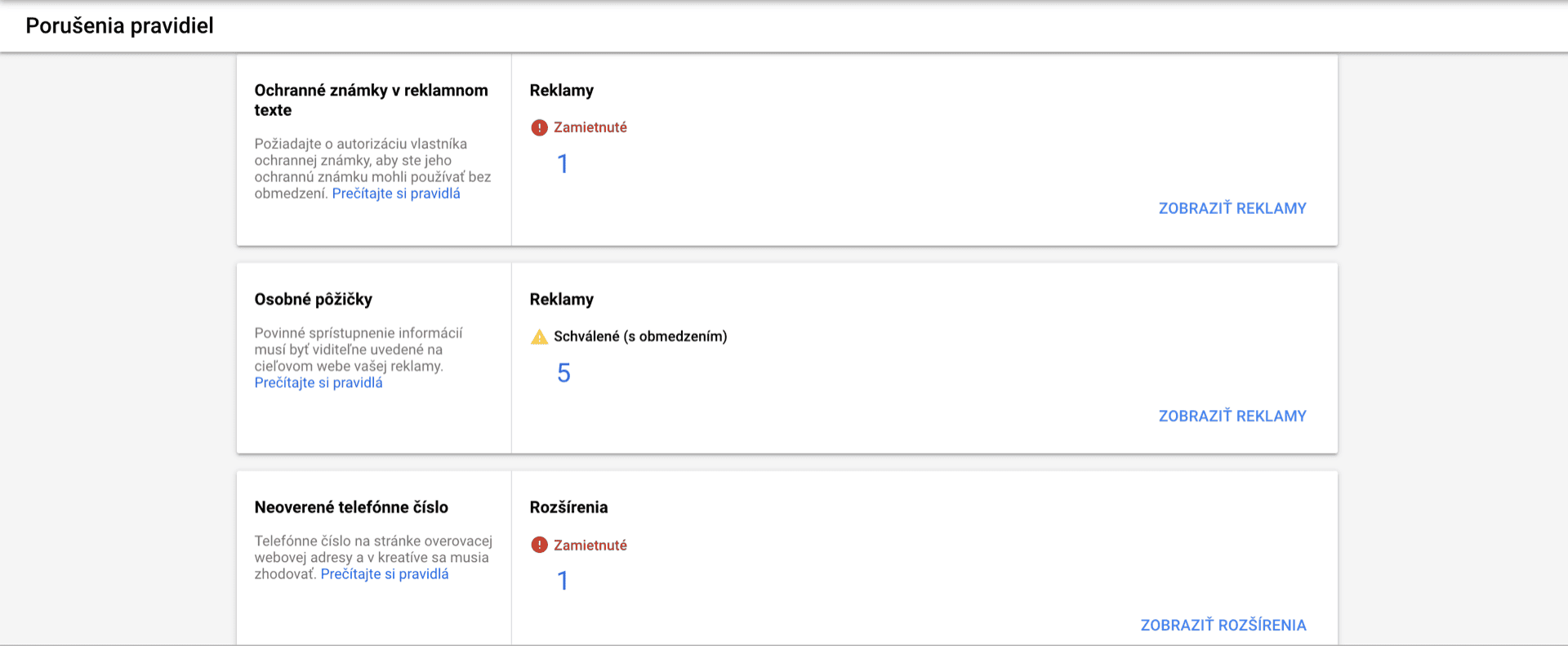
From April you can track, right in your Google account and without contacting support, more detailed information about why your ad or extension was disapproved. The feature will also include the option to send the ad for review automatically by Google's internal team. So from now on you can deal with disapprovals in your account more easily.
Bing changes its name
Along with the change of name to Microsoft Advertising, Bing Ads brings new personalisation of the user environment and plans to use built-in artificial intelligence in the near future. The aim of the change is to make optimising campaigns easier. More info: HERE.

New planners from Google to make work easier
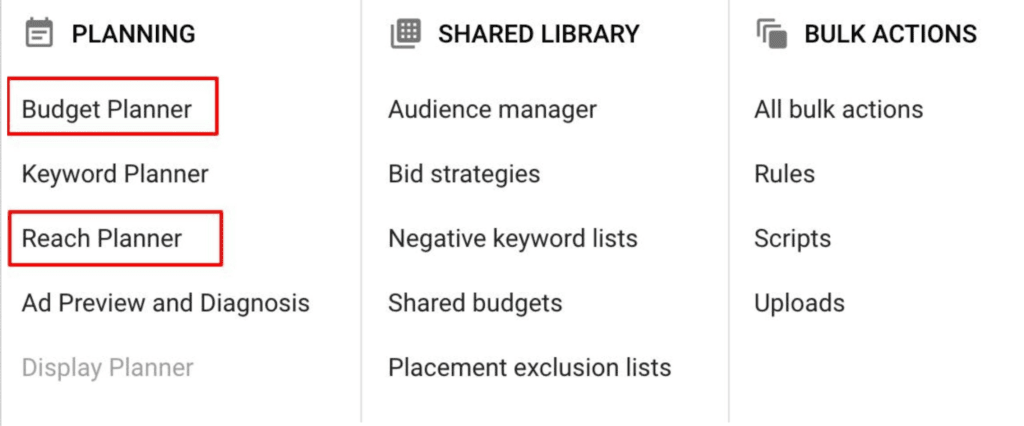
Another arrival in Google Ads is the addition of two new planners to help marketers plan campaign budgets better — the budget planner — and campaign reach — the reach planner.
Treacherous sensitive content
Even a good ad can come off badly if it appears in an unsuitable context. There are more than enough examples, so Facebook arrives with a hot new feature in the Facebook Ads settings. It is a new inventory filter — or better, a sort of descriptive filter — that gives you greater control over where your ads appear and what content can be associated with them. Through this tool Facebook wants to provide better protection for brands and their values. You are right, something similar already works at Google. For that we give a thumbs up: together with the mass removal of extremists' accounts across the whole political spectrum and of hateful posts on Facebook, this is another positive signal towards greater social responsibility from the large "social" players.
When choosing ad placements you will be able to pick from three settings, or filters: full inventory, unrestricted, with the widest ad reach; standard, which filters out sensitive content at a good ratio to ad reach; and limited inventory, which "blows away" all sensitive and mildly sensitive content and can affect the reach and effectiveness of your budget considerably.

Instagram will improve Stories
Back in April Instagram made it possible to tag products directly in posts, simplifying the path to closing a sale for both eager shoppers and sellers within the app. Understandably, the fewer clicks on the way to a purchase, the better. The condition for getting this practical feature is linking the Instagram business account with a Facebook account and a product catalogue.
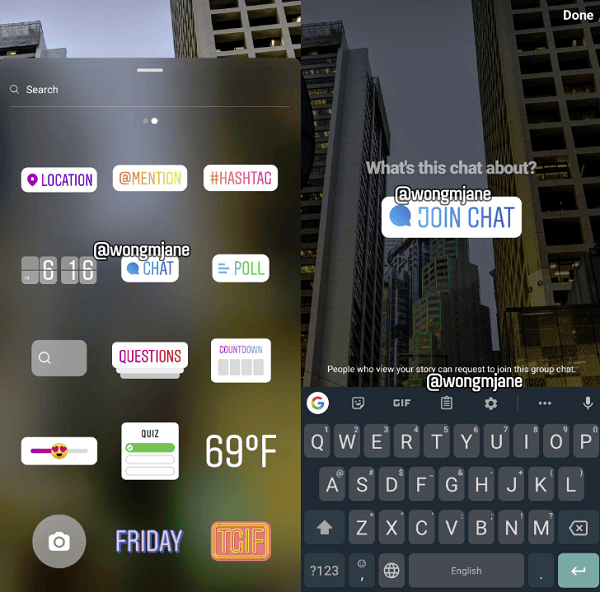
A "QUIZ" sticker has joined Instagram Stories, offering companies an entertaining and educational way of reaching customers and fans. Further "stickers" are expected, meant to extend direct message services.
The "JOIN CHAT" sticker, for instance, will allow a group discussion to be opened directly within a published story. Fans will thus be able to respond in the moment to the content and to other fans.
Besides group discussion, a "pro-social" DONATION sticker will also arrive, making it easier to build and support charitable fundraising campaigns within the app.
More precise targeting on Facebook still
Specialisation rules the digital world too. Facebook has responded to the ever greater fragmentation of consumer interests with a change in Facebook Ads. It lets you build more specific groups of users within existing FB groups. For now targeting is possible only on members of your own groups. With larger, high-quality groups this opens up an excellent opportunity for almost surgically precise targeting, and for gathering more precise data.

Offer your customers an appointment
This is a fine thing. For companies and for customers. And, of course, for Facebook, which keeps users on its own pages this way. Using the new Appointments feature you can arrange an appointment with a customer while talking to them in Messenger, for example. So you need not leave the app at all: the appointment is recorded automatically in your Facebook or Google calendar and your customer gets a reminder before the time. First, though, you have to fill in the Services tab with what you offer. It saves both sides time and, often, the frustration of possible misunderstandings. A customer can request an appointment themselves too, by clicking the Book now button under the company's cover photo.

Making use of the Discover feed
The Discover feed is a suggestion of articles and videos appearing on the mobile home page of Google.com. Suggestions are shown according to the visitor's interests, according to what they search for on Google and which sites they spend time on. A new report in Google Search Console makes it possible to obtain current statistics on click-through rate from the Discover feed, as well as on time and impressions. From a marketer's point of view the popularity and click-through rate of the Discover feed certainly warrant attention and planned optimisation. Because if Google picks an article or video for the list of suggested Discover feeds, it means its content has quality with a high click-through value.
Voice search grows ever more successful
An impractical novelty? Far from it. According to Microsoft's 2019 study of consumer adoption of voice technology, 72% of consumers already use voice search through a digital assistant. Besides voice search, the use of voice technologies such as smart speakers and digital assistants is rising too. According to that report, by 2020 as many as 75% of households will use the services of at least one smart assistant.
Search engines will have company
Google has announced a change to the default browsers on Android that may affect how information is searched for. Where until now an Android owner could choose from only two defaults — Chrome or Google — competitors' browsers will soon join the list. The one likely to be most pleased by the change is the Czech "home search engine" Seznam, the only one in Europe (so far) competing successfully with Google.