2026 will be a breakthrough year for digital design. Not because some new app, new framework or type of interface will appear. But because the very perception of design as a language is changing. In 2026 design frees itself from uniformity. It stops being merely a practical tool for guiding users and becomes a carrier of a brand's identity, views and stances. In recent years we have witnessed strong pressure towards optimisation, efficiency, speed and UX standardisation. Everything was to be simple, smooth, clean. Often, though, soulless too. In the chase for usability, visual variety gradually faded from the digital space. 2026 disrupts this equation. A visually bold new era is arriving. The main influence on that will be the rise of generative AI. Thanks to AI, every designer can suddenly test colour schemes, generate layouts and experiment with textures or motion within seconds. But AI is not only about speed. It opens the door to styles that would be too time-consuming or technically demanding by hand. Thanks to that, more playfulness, experiment and artistic freedom come into digital design.2026 will belong to those who dare to step out of the visual template. And perhaps to those who allow themselves once again to create rather than merely design.
AI as a visual creator: when design arises in collaboration with an algorithm
One of the strongest and fastest growing trends in 2026 is bringing artificial intelligence in as an active co-creator of design. So it is no longer merely about AI speeding up producing banners or filling in templates. We are entering a phase where algorithms directly collaborate with the designer at a conceptual level.
Tools such as Kittl, Figma AI, Adobe Firefly, Midjourney and Framer AI already today let you generate not only particular visual elements but whole layouts, user interfaces, colour palettes and even moodboards for branding. AI represents an intelligent assistant that can propose dozens of visual variants on the basis of a single idea or description.
An important aspect of this trend is the change in the designer's role. From the classic "executor of design" they become a creative director, curator and critic. AI creates the proposals, but the decision on what makes sense to use stays with the person. As an article from DatumCP says, "AI does not take designers' work away, AI gives them back time to think." And that is the key change. In their role, a designer moves from repetitive tasks towards conceptual and creative direction.
For designers, then, a simple rule applies: learn to work with AI, not merely using it. That means mastering how to frame a brief, understanding the models' possibilities, knowing how to prompt, judging the output's quality and turning it into a brand's particular visual language. Those who master this new language will have an enormous advantage in 2026.
Where smooth minimalism and sterile perfection dominated in recent years, a contrasting, raw, provocative style is arriving. This return is connected with two directions that at first sight seem opposed: retro-futurism and brutalism. One thing joins them, though: a rejection of uniformity and deliberate disruption of visual conventions.
According to Muzli, 2026 will be characterised by a marked "visual counter-attack" against the sterility modern UX design brought with it. Sites that look like template clones will gradually fade away. Designers and brands alike realise that beauty does not arise only in cleanliness but often exactly in imperfection.
Brutalism in the digital environment, though, is no longer what it once was. It is not about chaotic or unusable design. Modern brutalism is sophisticated and deliberate. It works with large typography, sharp transitions, visible grids, asymmetry, basic fonts and hard edges. The visual language is hard, honest and provocative. It deliberately shows its "imperfection" as a style.
The key elements that will appear in this trend are:
Visible grids and layouts that are not hidden but deliberately exposed as part of the visual.
Enormous typography, often without decoration, communicating directly rather than aesthetically.
Deliberate asymmetry, layouts breaking standard alignments but still legible.
Raw textures and contrasting colours creating tension and intensity.
What is exceptional about this trend is its ability to evoke emotions. Instead of smooth beauty it offers an experience, a stance and a visual awakening. For designers that means a challenge. Learning not only to disrupt the rules but to do it purposefully and with a concept. Brutalism, after all, is not chaos. It is systematic rawness that reveals the construction instead of hiding it. And retro-futurism? It adds to this mix nostalgic elements of the past cast into a new technological context.
3D and spatial design
In 2026 the web will literally "lift off the flat surface". Design moves from the two-dimensional plane into three-dimensional space and changes the way a user perceives digital content. It is no longer only about what a user sees but about how they move, react and feel in space. That is exactly why 3D design is becoming one of this decade's most marked visual trends.
Technically this trend is made possible by the development of tools such as WebGL, Spline, Three.js, Babylon.js and the Apple Vision Pro SDK. These tools let you create full-fledged 3D environments directly in a browser. A user can thus rotate products, walk through interactive galleries or move around a space using only the cursor and scrolling.
Among the key elements of this trend are:
Interactive 3D objects that can be zoomed, rotated or taken apart – e.g. products in e-shops, architecture, equipment, technology.
Dynamic data visualisations reacting to a user's movement, for instance on hovering or scrolling.
Full-screen experiences with smooth movement – for instance where a page does not change through classic scrolling but by simulating a "walk" through space.
Isometric design
This trend brings an enormous visual "WOW effect" that has not only aesthetic but functional value too. Interactive 3D design can markedly raise a user's engagement, lengthen the time spent on a page and leave an impression almost impossible to achieve with traditional layouts. In the user's eyes the brand turns into an experience.
Authenticity
At a time when everything is perfectly aligned, vectorised and symmetrical, in 2026 a desire for tangibility, authenticity and a personal touch is sounding ever louder. That is exactly why the trend of mixed media and collage aesthetics is coming to the fore. A mix of visual style combining illustrations, hand drawings, photographs, 3D elements and textures into one layered whole. The result is design that comes across as handmade. It is the answer to the need for a more human, more creative visual language.
It is a reaction to the uniformity of digital templates and the "sterile" vector perfection that flooded many sites and apps over the past decade. Brands wanting to stand out turn to a visual expression that comes across as personal and unashamedly artistic.
This trend is marked by combining various visual layers and styles that at first sight may not match but in the design's context create a strong visual identity. That can be a combination of:
A delicate hand drawing with a technically precise 3D model,
a retro photograph with a colour collage of cuttings,
illustrations with animated elements and pixel art.
The key aim is not smoothness but character. The visual effect of such an approach is playful, lively and human. It comes across as something that arose in a studio rather than in a template. This approach creates emotion, movement and a layering of meanings. Instead of a single plane, the design comes across as a multi-dimensional story.
Another advantage of this approach is that it does not demand technical perfection. It is space for designers who want to create visually expressive work. With the help of tools such as Adobe Photoshop, Procreate, Canva and Figma with plugins, but AI tools for generating illustrations and textures too, creating collage visuals is becoming more available than ever before.
Micro-interactions
Digital design has long since stopped being only about what we see and is above all about what we feel. In 2026 micro-interactions and kinetic typography take on new significance: they stop being merely an aesthetic addition and become the main carrier of the experience. Visual style is no longer static. It slowly starts to breathe, react and communicate. Users expect an interface to accompany them, react and live along with them. Every click, scroll and transition between sections should be more than merely a function.
Discreet movements, micro-interactions, have an enormous influence on the perception of a design's usability and quality. These are, for instance:
A delicate ripple effect when clicking a button,
animated transitions between UI states,
a "living" input field reacting to touch or the cursor,
micro-hover effects that emphasise interactive elements without needing explanation.
These micro-elements give an interface humanity. The feeling that something is happening, that the system reacts and takes the user into account. A big part in this trend is also played by typographic movement. Type ripples, grows, breathes, reacts to scrolling or the cursor and creates rhythm in communication. Sound effects are being added too as part of visual design. Not in the form of intrusive sounds but delicate tactile sound responses. These sounds are often designed as part of a brand's visual language.
For designers this is a challenge and an opportunity. Starting to think of an interface as a living system, not merely a layout of elements. Learning to work with tools such as Lottie, Framer, GSAP, Figma Smart Animate and CSS Motion.Visual style in 2026, then, is not about static beauty but about a visual experience in motion. And it is exactly micro-interactions, kinetic typography and delicate details that make design something more than merely a tool. They make it an experience that stays in the memory.
Colour, contrast and visual languages
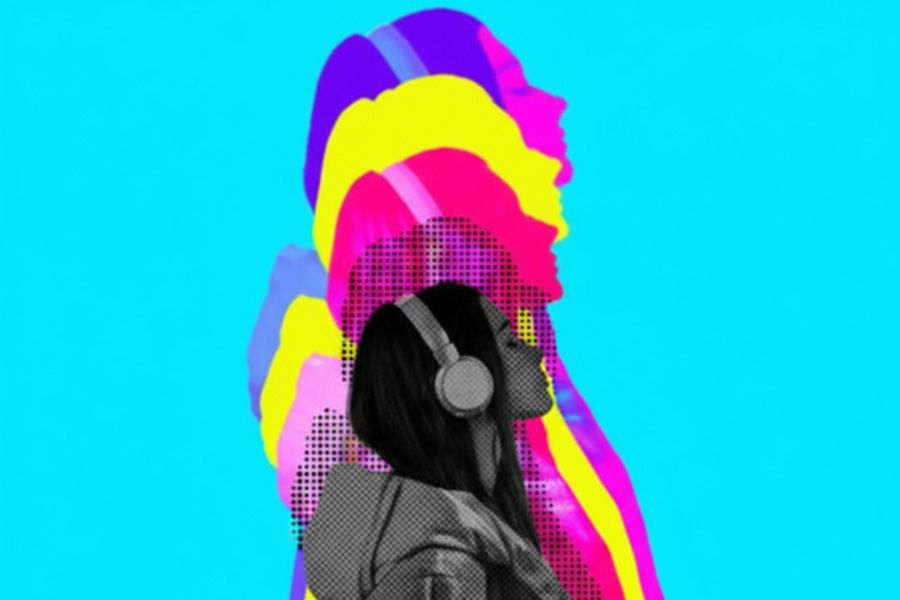
2026 will bring a bold return of colour to design's centre. Colour becomes the main carrier of visual identity, a means of expressing a brand's mood, stance and character. After years of "digital white" and neutral pastels, design turns away from safe solutions and plunges into maximalism, contrast and texture.
Among the main characteristics of colour trends in 2026 are:
Saturated, full colours dominating an interface rather than merely serving as a background.
High contrast – not only light colours on a dark background but combinations that visually "shout" and draw the eye.
Textured backgrounds and surfaces adding depth and a tactile effect.
Colour boldness as a strategy – a brand communicates through colour as clearly as through text.
Ever more often we see sites abandoning traditional white-space-based design and replacing it with a coloured background that carries meaning. For instance:
Saturated red evokes urgency, energy, activism.
Toned purple brings a touch of futurism or mystique.
For designers that means learning to think in terms of colour expression, not restrictions. Not being afraid to step away from "safe" tones. Testing, combining, disrupting the rules so that a new aesthetic arises. Suitable tools such as Coolors, Khroma, Adobe Color or Colormind can help you discover new colour combinations.
Using colour as the main carrier of visual identity lets you create a recognisable visual language that stays in the memory. In an environment where many brands still choose design "safe mode", it is exactly bold work with colour that can decide which brand catches the eye at first sight.
Design as a brand's identity
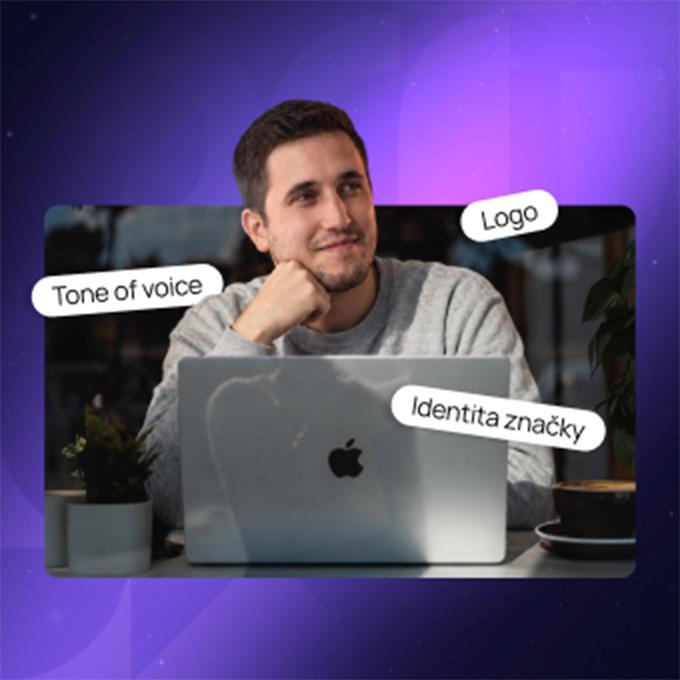
In 2026 the meaning of the phrase "visual identity" is changing too. Two key tendencies shape this variable: "hyper-individualism" and "elemental folk". Both show that design is ceasing to be generic and unified. Brands build their own visual language, which should be recognisable before a user even reads the firm's name or slogan.
A visual identity must be iconic. A user must remember it and be able to recognise it in a browser, on social media, in a campaign and in animation. Design thus turns into a visual signature working as a mark of recognition
The key elements of this trend:
A graphic style that cannot be mistaken for another – a brand must look "like itself", not like the competition.
Original visual elements - hand illustrations, custom icons, unusual combinations of typography and colour, unconventional layouts.
A style that works across formats – in static graphics, in motion, in animation, in 3D and in an app's interface.
Emotional consistency - a user should always "feel" the brand – whether it is a social post or onboarding in an app.
The visual therefore becomes a strategic tool. It is not merely the result of design; it is a direct part of communication and business strategy. Brands are starting to use design as a way of:
Expressing value (e.g. sustainability through natural materials and earthy colours),
standing out (e.g. a punk-brutalist style in fintech),
evoking emotion (e.g. a nostalgic retro style for lifestyle products),
building trust (e.g. clean but not sterile design in healthcare).
For designers that means it is no longer enough for brands "to make nice graphics". They have to be given a visual personality with continuity and memorability. Design has to become the teller of a brand's story. It should be able to communicate without words too.
Digital design in 2026 is no longer only about how something looks. It is about what it communicates, how it comes across and what impression it leaves. With the arrival of generative AI, kinetic typography, 3D space, collage aesthetics and hyper-individual visual languages, design becomes something much bigger than the sum of its parts. It turns into an experience, a stance and an identity.
Brands that adapt to this change will gain an advantage that cannot be copied. Not because they use the newest effect or the fashionable colour. But because they create their own visual language.
Recommended reading
The latest trends, proven practices and analyses from the digital world. Find out how to take your technology and marketing growth further.