Banner

A banner is a graphic element placed on websites in order to promote a particular product, service or event.

A banner is part of paid online advertising on the display network. The display network covers the various websites and platforms where advertisers can place their ads. Banners appear as images and should contain an eye-catching visual, copy and a CTA element linking to the advertiser's page. A banner can also contain animation and interactive elements to engage a potential customer.

Advantages

  • Brand awareness (branding): even if the user does not click the banner, visual contact with the brand makes it more memorable.
  • Broad reach: through advertising networks (such as the Google Display Network) you can show your banners on millions of sites worldwide.
  • Precise remarketing: banners are ideal for reminding users who have already visited your site but did not complete a purchase.
  • Visual creativity: they communicate emotion and product design far better than plain text ads.
  • Fast results: a banner campaign can generate massive traffic within hours of launch.

Disadvantages

  • Banner blindness: users have subconsciously learned to ignore the places on a site where advertising usually appears.
  • Ad blockers: ad-blocking software can mean part of your banners never reach the target group at all.
  • Low CTR: compared with search advertising, banners usually have a lower click-through rate (often under 1%).
  • Production effort: quality HTML5 banners require the work of both a designer and a developer.

Practical example

On the display network you will come across banners in a range of sizes and formats. Find out which online banner dimensions are the most widely used for mobile devices and desktops.
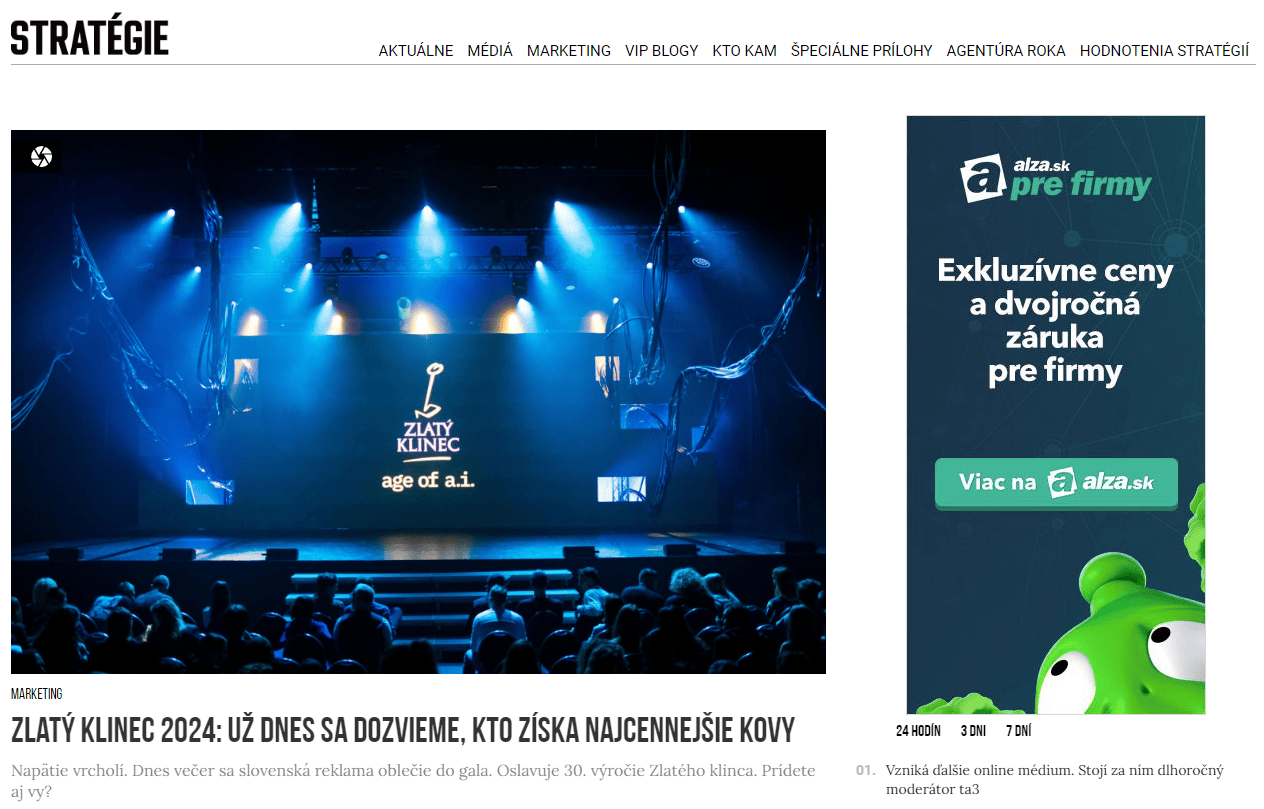
an example of an Alza advertising banner on the Stratégie site

An example of an Alza advertising banner on the Stratégie online portal